
Marco Rubio Family History
Overview
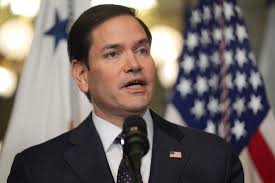
Marco Antonio Rubio was born on May 28th, 1971 to Cuban Americans Mario and Oriales Rubio in Miami, Florida. He was the third of their four children. His elder brother Mario had been born twenty-one years before him in Cuba.
Marco’s early years were in Miami. But the family moved to Las Vegas when he was eight. His father worked there as a bartender at Sam’s Town Hotel; while his mother was a housekeeper at the Imperial Palace Hotel. They returned to Miami when Marco was twelve. He then attended South Miami Senior High School where he excelled in baseball and graduated in 1989.
Financing was available for Marco to continue his education at the University of Florida (a Bachelor of Arts in political science) and at the University of Miami School of Law (a Juris Doctor cum laude).
Florida Politics. In 1997, at the age of twenty-six and a year after receiving his law school degree, he decided to run as city commissioner for West Miami, the community where his family and other Cuban exiles lived. He narrowly won that election and his political rise began.
Marco was elected to the Florida House of Representaives in 2000 and was the House Speaker in 2005. He became the US Senator for Florida in 2010. During this time he continued to live modestly in West Miami, acquiring his home in 2005 and residing there until 2024.
As Marco ascended in Florida politics, he often told audiences that he was the “son of exiles” who had left an island governed by a “thug” in Fidel Castro. This was not strictly true. His parents had in fact departed Cuba three years before Castro took power. But his anti-Castro rhetoric had resonance with the Cuban exiles in Florida.
National Politics. Marco contested the 2016 US Presidential race as the Republican candidate. This brought him much more exposure. But he ran up against Donald Trump who defeated him in the Florida primary and went on to win the Presidency. Marco returned to the US Senate.
In November 2024, after Trump had won the US Presidency for a second time, he appointed Marco Rubio to be his Secretary of State, the first Hispanic to hold that office. Marco had enough credit with Republicans and Democrats in Congress that he was quickly confirmed in the post.
The Rubio Name and Marco’s Origins
Rubio is a Spanish aurname meaning “red.” It might describe someone of ruddy complexion or with red hair. It could also be a place-name, such as the Rubio village near Seville in southern Spain. There are some 100,000 Rubios in Spain and a larger number in Hispanic America, most notably in Mexico.
Marco’s Origins. Marco has said that his family from Cuba was of both Spanish and Italian heritage – the Spanish being from the town of Seville in Spain and the Italian (Lorenzo and Carolina Geroldi) from Casale Monferrato in Piedmont in northern Italy.
Marco probably highlighted Seville after he found out – while appearing on the PBS program Finding Your Roots – that his ancestor Jose de Reina y Tosta (1764-1834) had come from Seville. Jose had trained as a lawyer and was the town’s public prosecutor.
The line from Jose and Manuela Reina ran as follows:
- Rafael Reina from Seville (b. 1795) m. Maria Salvadores in Valencia, Spain
- Rafael Reina from Valencia (1846-1905) m. Maria Eloisa in Cuba
- Eloisa Reina from Cuba (1894-1935) m. Antonio Rubio in Cuba
Eloisa was Marco’s grandmother (although, staying in Cuba and dying young, she was absent from his life).
Her husband Antonio had arrived in Cuba in the early 1900’s, sometime after Spain had relinquished control of the island. Antonio’s line of Rubios came not from Seville, but from the Murcia region of southeast Spain. Their first recorded Rubio was Juan Rubio who was baptized in the Murcian town of Santa Maria in 1782.
Marco’s mother Oriales Rubio nee Garcia also had Spanish heritage, her ancestors having lived in the Canary Islands and Valencia. DNA analysis suggests that Oriales had some Native American lineage, although not much (less than 5 percent).
Cuba and America
Their time in Cuba was not that long on the Rubio side, some 40-50 years at most.
Antonio Rubio. Antonio had come initally to the Pinar del Rio province of western Cuba. But later he moved to the working-class neighborhood of Cerro in Havana where he and his wife Eloisa made a living delivering food to the workers of a nearby tobacco factory. Eloisa died in 1935 when their son Mario was just nine.
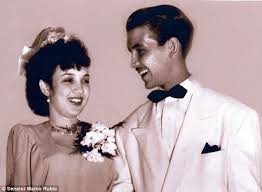
In the 1940’s Mario was working as the security guard in a local wholesale store. He was at that time poor and sleeping in a nearby warehouse. His wife-to-be Oriales was working as a cashier at the store. They met and married in 1949.
Pedro Victor Garcia. With Spain having retreated from Cuba, America loomed larger on the horizon. The impetus to go there came from Marco’s maternal side.
This line in Cuba had begun with Carlos Perez who arrived from Spain in the 1890’s, married and had seventeen children. They would farm sugar in the tiny village of Jicotea some 160 miles east of Havana.
One of Carlos’s sons was Pedro Víctor García. He was so stricken at a young age by polio that he could not work in the fields. He therefore left Jicotea to pursue a career in the railroad business. This took him further east to Cabaiguán. There in 1920 he met his wife and raised a family of seven. all girls. These girls included Marco’s mother Oriales García. Pedro’s family of nine lived in a one-room house with a dirt floor.
Pedro, later hobbled by a bus accident, was let go by the railroad company. He would then just hang around town, read newspapers and novels to entertain the cigar rollers, and became a “skillful storyteller” as his family put it.
In 1940 Pedro left Cabaiguán with his family to move into a housing project in Havana.
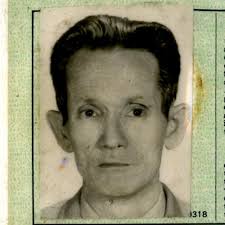
Pedro’s life was not yet done. In 1956 he brought his family – including his daughter Oriales and her husband Mario – to Miami where he received the coveted American green card.
However, he forfeited his US legal status in 1959 when he returned to Cuba after the revolution and stayed there. He eventually found life in Cuba intolerable and fled back to Miami in 1962. Luckily Pedro was allowed back into America.
His death in Las Vegas in 1984 fell particularly hard on his 13-year-old grandson Marco. Marco has written vividly of finding his grandfather on the floor of their home in Las Vegas after a bad fall. When the paramedics came and transported him to the hospital, Marco accompanied him, acting as his translator.
In his autobiography An American Son, Marco said that his closest boyhood friend was his cigar-smoking, Fidel Castro–hating grandfather, a proud Cuban exile who taught him to believe in Reagan, American exceptionalism and himself.
Cuban Regrets? Mario never returned to Cuba and his younger children Marco and Veronica never visited there.
But his wife Oriales did go back several times. She made at least four short trips to Cuba after Castro’s victory in 1959, including a month long stay in February and March of 1961. This she took in the company of her sisters and of her two children at the time.
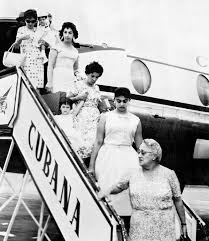
She might have gone to Cuba with the consideration of staying. But she did return.
Miami, Vegas and Elsewhere
Mario and Oriales’s starting base in America was West Miami, the home for Cuban exiles in the city. A 1958 city directory showed a Mario Rubio employed in Miami at the Roney Plaza Hotel. But the family was itinerant. They lived at various times in New York and Los Angeles and moved to Las Vegas in 1979 where they had family. They returned to Miami in 1983.
Mario found work as a bartender and school crossing guard; while Oriales was employed as a hotel maid and a shelf stocker at Kmart. Mario did try his hand in various small businesses – a vegetable stand, a dry cleaner, a grocery – but they never amounted to much. He had some dubious relations. His brother-in-law Orlando Cicilia was arrested in 1987 for being a drug dealer.
Mario and Oriales lived to see their son Marco complete his law school degree and begin his political life in the Florida House of Representatives. Mario died in 2000 and Oriales in 2019.
Marco Rubio’s Family Tree
- Cuba – Paternal Line
- Dionisia Rubio from Santa Maria, Murcia in southeast Spain (1854-1896) m. Concepcion Pazos (1860-1898)
- – Antonio Rubio (1884-1945) moved to Cuba in the early 1900’s
- Rafael Reina from Valencia in Spain (1846-1905) moved to Cuba and m. Maria Eloisa
- – Eloisa Reina (1894-1935)
- – Soledad Reina (1903-1969) m. Sr. Arsis
- – Gerardo Reina (b. 1916) m. Dolores Bordallo
- Antonio Rubio from Pinar del Rio, Cuba m. Eloisa Reina in Cuba and moved to Havana
- – Mario Rubio (1926-2000) moved to America in 1956
- – Concepcion Rubio m. Jose Vasquez and died in Cuba in 1963
- Cuba – Maternal Line
- Carlos (Calixto) Perez from Valencia on the east coast of Spain (b. 1875) came to Cuba and m. Ramona Garcia (b. 1870) in the 1890’s
- – Pedro Garcia (1899-1984)
- – Carlos Garcia (b. 1901) m. Eloina Toledo
- – plus fifteen other children
- Pedro Victor Garcia from Jicotea, Cuba m. Dominga Rodriguez (1903-1967) in Cabaiguán, Cuba in 1920. He came with his family to Miami in 1956 and died in Las Vegas in 1984.
- – Olga Garcia (1921-2013) m. Manuel Garcia
- – Elda Garcia (1922-2005) m. Aurelio Varona
- – Irma Garcia (1926-2010) m. Luis Lastres
- – Delores Garcia (1928-2008) m. Armando Denis
- – Oriales (Oria) Garcia (1930-2019)
- – Adria Garcia (1937-2001) m. Manuel Diaz
- – Paula Garcia (1940-2022) m. Oscar Lozano
- America
- Mario Rubio Reina from Havana, Cuba (1926-2000) m. Oriales (Oria) Garcia Rodriguez in Havana in 1949 and came to America in 1956. They made their home in Miami.
- – Mario Rubio (b. 1950), former US Army Green Beret, born in Cuba
- – Barbara Rubio (b. 1960) m. Orlando Cicilia
- – Marco Rubio (b. 1971), politician
- – Veronica Rubio (b. 1972) m. Puerto Rican singer Carlos Ponce, divorced
- Marco Rubio m. Jeanette Dousdebes (b. 1973) from a Hispanic (Colombian) family in Florida in 1998
- – Daniella Rubio (b. 2000)
- – Amanda Rubio (b. 2002)
- – Domenick Rubio (b. 2005)
- – Anthony Rubio (b. 2007)
Click here for return to front page
Written by Colin Shelley