
Gideon Haigh Family History
Overview

The Australian cricket writer Gideon Clifford Jeffrey Davidson Haigh was born on December 29th, 1965 to Peter and Isabel Haigh in London. He introduces himself simply: “I was born in London, raised in Geelong, live in Melbourne.”
He was studious growing up. He first visited the State Library of Victoria in Melbourne when he was twelve. But there were two early family tragedies in his life for him to deal with:
- in 1972, when Gideon was six, his father abandoned the family in Geelong and left for America. He and his younger brother Jaz were raised by their single Mum.
- then in 1987, young Jaz was killed in a car accident. It was only many years later that Gideon took time to process what had happened and write about it.
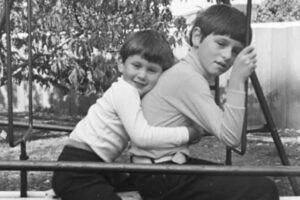
Gideon’s solace may have come in playing cricket and the cameraderie it provided – in Geelong and then at the South Yarra cricket club that he joined in 1993.
Journalism. Gideon’s working life began with newspapers, first with The Age in Melbourne where he worked from 1984 to 1992 and then for three years with The Australian. After 1995 he became an independent journalist. He has written on many subjects and appeared on many forums, but has become best known for his cricket writing.
Cricket Writing. There has been a long history in cricket writing, both in England and Australia. England has had its Plum Warner, Neville Cardus and John Arlott, Australia its Johnny Moyes and Jack Fingleton. Informed readers would now add Gideon Haigh to this select list, such is the style and clarity of his writing.
Gideon was eight when he attended his first England vs. Australia Ashes Test in 1974 and twenty-four when he reported on his first Ashes series in 1990.
Since that time he has written prolifically on cricket. He has done books on Ashes series, books on cricket history (such as The Big Ship and The Summer Game), and many other books (there are more than fifty in total) on varying topics. A more recent development has been his Cricket et Al podcast with Peter Lalor.
On Shane Warne
Shane Warne has been the greatest cricketer of his age. This is a brief excerpt from Gideon’s 2012 book On Warne.
“Eight paces: that’s all it was. And only the last few counted. Shane Warne’s bowling action was seen more than 50,000 times in international cricket. Yet it never ceased to beguile and excite – that something so simple, so brief and so artless could cause so much perplexity at the other end and such anticipation around the arena.
There was that easy, relaxed saunter to his bowling disc. It was the stroll of a man without a care in the world, whether he’d just beaten the outside edge or been hit for six. As Warne would say cheerfully: ‘No matter how far they hit it, the ball always comes back.’
Once at Trent Bridge, he observed England’s Robert Croft looking at a big screen admiring a six he had just hit. ‘Hey Crofty! he called out. ‘Don’t worry, mate. You’ll be able to see the replay again in a couple of minutes.’ He was right.”
The Missing Father
There is not much to say. Gideon’s father Peter Haigh came and went.
Peter had been born in Yorkshire, England in 1942. He had married young in London. He and his Australian bride Isabel soon had a baby. That was Gideon. They set off for Australia in 1968, firstly to Isabel’s hometown of Newcastle, NSW and then to Geelong, Victoria.
But this married life did not suit him. He had a roving eye. In 1972 he left for America where he remarried and found work in corporate America. Apart from a brief return on the occasion of the funeral of his son Jaz in 1987, he was not to be seen in Australia again.
He died in America in 2026. On hearing the news, Gideon had no feelings:
“Not yet thirty, you left two sons and two countries behind. Any sensation of loss was muted by us having long been estranged. I was not even particularly curious about him. There never seemed much point wondering about someone with whom I never had a proper conversation.”
The Australian Lines
But there is much more to say on Gideon’s maternal side. We have the Shoobridges and the Clacks, descendants of English arrivals in the early and the mid 1800’s. Both lines prospered in Australia.
The Shoobridge Line. Shoobridge is a rare English surname, derived from the Anglo-Saxon locational name for a sheltered bridge. Richard Shoobridge was born around 1670 at Benenden in Kent. Today only about 650 people bear the name globally. Half of them are in Australia because of the immigration recorded below.
In 1822 William Shoobridge from Tenterden in Kent arrived in Hobart, Tasmania on the Denmark Hill with the remnants of his family, three of his young children and their mother having died during the six month voyage.
William found conditions at first tough. He narrowly escaped death from a bushranger’s bullet. His land grant near Hobart was forested and needed clearing. But with the help of convict labor he managed this and started growing hops at a place he called Providence Valley. He died in 1836 and was buried in a Quaker graveyard.
The line in Tasmania from William to Gideon’s grandmother Frances ran as follows:
- William Shoobridge (1781-1836)
- Ebenezer Shoobridge (1820-1901)
- Louis Shoobridge (1851-1939)
- Sir Rupert Shoobridge (1883-1962)
- Frances Clack nee Shoobridge (1915-2001)
Ebenezer was William’s second son. He migrated to New Norfolk in the Derwent valley, so called because it had been first settled by convicts released from the Norfolk Island penal colony.
Ebenezer’s Shoobridges went their own way, both in terms of their livelihood and their involvement in local politics:
- through extensive irrigation they pioneered the growing of apples and other fruits at their extensive Glenora estate in the Derwent valley. Ebenezer built the first Kentish hop kiln there in 1867.
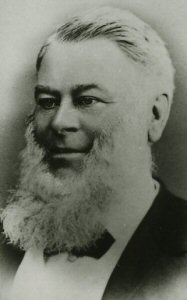
- Ebenezer also represented New Norfolk in the Tasmanian House of Assembly, as did Ebenezer’s sons William and Louis. And Louis’s son Rupert became President of the Tasmanian Legislative Council and was knighted for his services in 1947.
Frances was Rupert’s younger daughter. She grew up at their home at Forest Lodge, Glenora.
On December 19, 1940 she married Jeffrey Clack, a young airman with the RAAF, at St. Phillip’s Church in Sydney. Her sister Esther acted as bridesmaid and her father Rupert walked her down the aisle. They had all been staying at the Australia Hotel on Castlereagh Street, then considered the best hotel in Australia.
The Clack Line. Clack is a bit more common surname than Shoobridge, with some 2,500 presently recorded in England. The name is derived from the old English nickname clacc given to someone who clacked or chattered.
Henry Clack came from Richmond in Surrey. He had arrived in Sydney in 1853 on the Meteor and settled in Newcastle, NSW with his wife Harriet and their six children. The line from Henry Clack to Gideon’s grandfather Jeffrey ran as follows:
- Henry Clack (1802-1891)
- Thomas Clack (1840-1901)
- Henry Clack (1867-1933)
- Jeffrey Clack (1911-1964)
These Clacks – from immigrant Henry to son Thomas and grandson Henry – were mainly known through their association with Newcastle’s Anglican Christ Church (which became Newcastle Cathedral after its expansion in 1892). They each in turn served as its Honorary Treasurer.
Thomas in addition was a superintendent at the Christ Church Sunday school. A stained glass window in the church, dedicated in 1904, commemorates him. He was a well-known resident and businessman in the town through his grocery business and his involvement in other local enterprises. His home on Church Street, Newcastle passed down to his son Henry and his grandson Jeffrey.
Jeffrey came to adulthood at the time of imminent war. He enlisted in the RAAF (the Royal Australian Air Force) in 1940 and served as a Flight Lieutenant over the course of the war. He also got married in 1940. He later returned with his wife to Newcastle.
He and Frances would have three children, two daughters Isabel and Louise and a son Rupert. He worked as a stockbroker on Bolton Street in Newcastle. Every day when they were young he would walk his two daughters to school.
Young Rupert, when aged two, had been saved from serious injury or death by a carpenter who broke his fall from the upstairs balcony at their home.
Isabel Haigh née Clack. Isabel, Gideon’s mother, attended the Church of England Girls’ Grammar School (CEGGS) in Newcastle. She was a bit of a rebel there. She recalled in 2022:
“I was a child who liked the sound of her own voice, refused to ever let a teacher have the last word, and had a dislike for authority. Amazingly I lasted at school until 1958 when I completed the Leaving Certificate.”
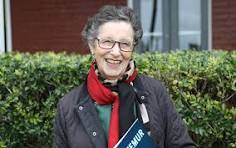
This rebel later went off to London where she met and married her husband Peter Haigh. They returned to Australia. But the marriage broke up and she raised their two children as a single Mum.
Gideon Haigh’s Family Tree
- Maternal Line
- Sir Rupert Shoobridge from Tasmania (1883-1962) m. Fanny Walch (1881-1928) in Hobart, Tasmania in 1906
- – Esther Shoobridge (1907-2001), nurse in WW2
- – Charles Shoobridge (1908-1995) m. Ena Robinson
- – John Shoobridge (1911-2003) m. Thelma Allen (in a later tragedy their grandson Peter Shoobridge, a demented poet, killed his four daughters in 1997 before taking his own life)
- – Frances Shoobridge (1915-2001) m. Jeffrey Clack
- – Louis Shoobridge (1920-2005) m. Corinne McLean
- Henry H. Clack from Newcastle, NSW (1867-1933) m. Marie Jones (b. 1885) in Newcastle, NSW in 1906
- – Thomas Clack (1907-1959)
- – Valmai Clack (1908-1988) m. Ross Gollan
- – Jeffrey Clack (1911-1964) m. Frances Shoobridge
- Frances Shoobridge from Tasmania m. Jeffrey Clack with the RAAF in Sydney, NSW in 1940 and moved afterwards to Newcastle, NSW
- – Isabel Clack (b. 1942)
- – Louise Clack (b. 1943)
- – Rupert Clack (b. 1946)
- Isabel Clack came to England and m. Peter J. Haigh from Huddersfield, Yorkshire (1942-2026) in Wandsworth, London in 1965. They moved to Australia in 1968. Peter left the family in 1972 and moved to America where he remarried. Isabel settled in Geelong, Victoria.
- – Gideon Haigh (b. 1965)
- – Jasper (Jaz) Haigh (1970-1987), died in car accident
- Gideon Haigh m. Charlotte Barker in Melbourne in 2009, later separated; subsequently with writer Caroline Overington (b. 1970) in Melbourne
- – Cecilia Haigh (b. 2010)
- Paternal Line
- Clifford Haigh from Huddersfield, Yorkshire (1911-1974) m. Nora Stott (1916-1991) in Calder, Yorkshire in 1940
- – Ann Haigh (b. 1941) m. Alan Benson in 1963
- – Peter Haigh (1942-2026) m. Isabel Clack (divorced), died in America
- – Douglas Haigh (b. 1945) m. Linda Smith in 1969
Click here for return to front page
Written by Colin Shelley